
The Art of Healing: Contemporary Art Therapy
Art and self-expression have been embedded in ritual, healing,and communication throughout history and across cultures.
The formal term ‘art therapy’ was first introduced in the early 1940s in America by psychologist Margaret Naumburg and by artist Adrian Hill in Britain.
Naumburg encouraged spontaneous creative expression as a technique to release and visualize emotion and conflict. While recovering from tuberculosis Hill discovered the therapeutic benefits of painting and drawing. He identified that making art could release energy, occupy the mind and body, and build self-esteem. These benefits continue to be central to the practice of art therapy today.
In a post-pandemic world in which greater attention is being given to the importance of positive mental health, the use of art as therapy can be vital. The British Association of Art Therapists explains, “Art therapy uses art as the primary mode of expression, alongside talking with an art therapist. It aims to reduce distress and improve social, emotional, and mental health by promoting insight, self-compassion and a sense of agency and self-worth.”
This practice can involve using painting, drawing, and sculpting to facilitate spontaneous self-expression. The process of making art can help a person make sense of complicated emotions, thoughts, and experiences. There is a growing archive of studies that evidence the positive effect of art therapy in helping young people with mental health difficulties, veterans, adults and children who are managing psychosis and schizophrenia.
Art can be used to access and express difficult thoughts and feelings that resist communication in words. In this therapeutic context, art is a powerful tool for creating connections and providing care.
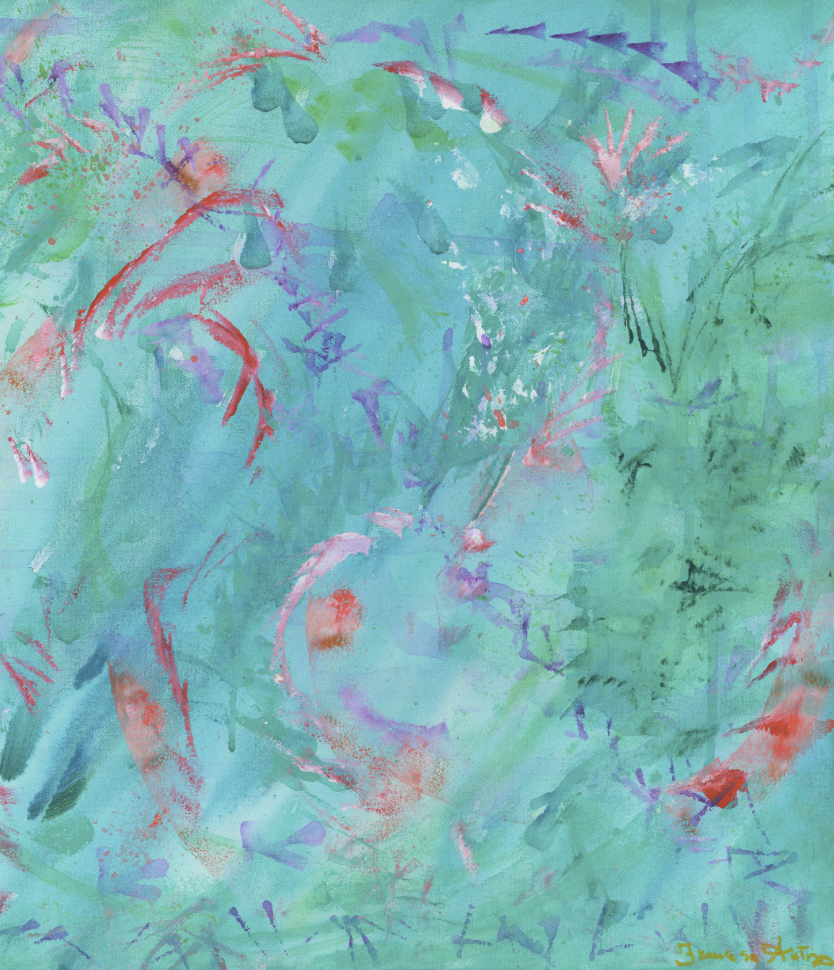
Francesca Autino: Paradise
Acrylic on canvas
40cm x 40cm